How camera evidence becomes checked geometry
- Image-to-3D reconstruction
- Multi-view capture
- Photogrammetry
- Mesh validation
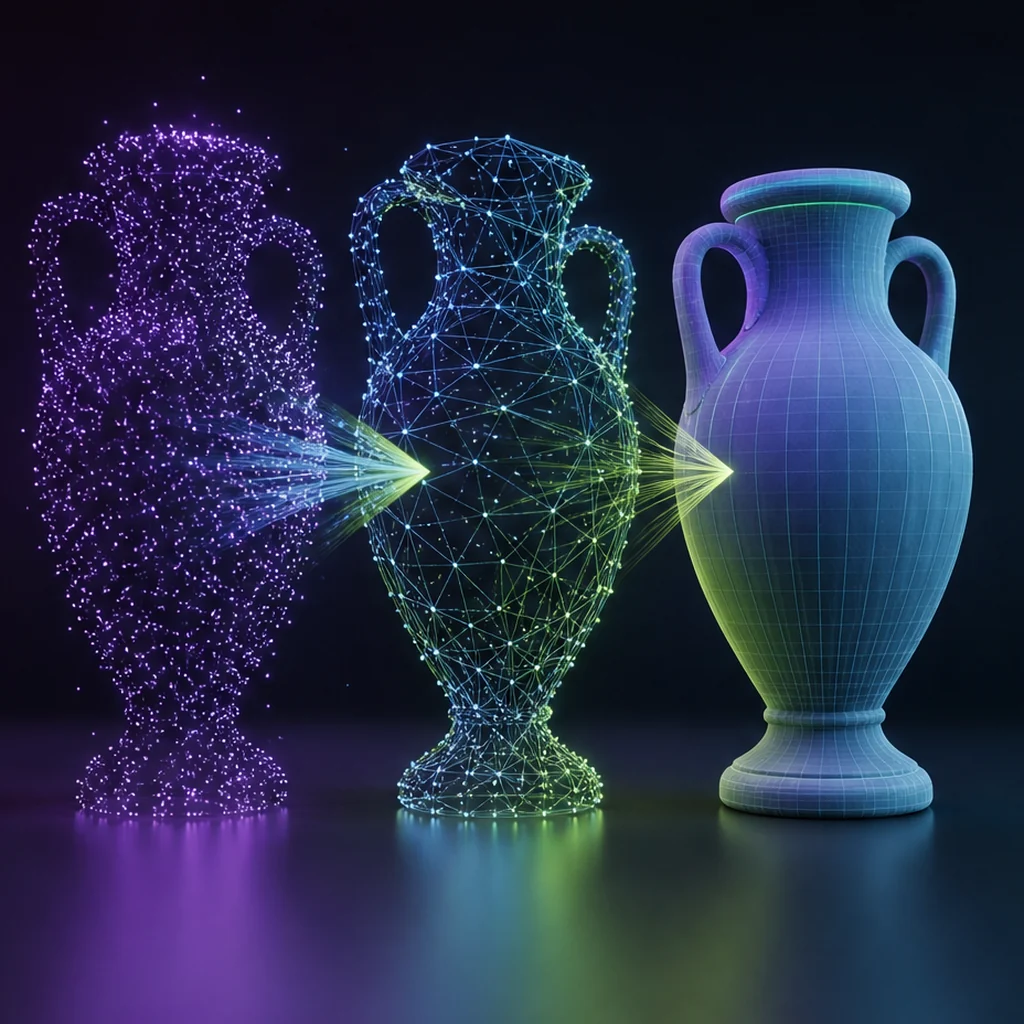
One image
shows visible surfaces from one viewpoint.
More camera views
reduce hidden-surface uncertainty.
A neutral render
reveals geometry errors beneath the material.
A photograph is not a complete shape
Perspective projects a 3D scene into two dimensions. Many different shapes can explain the same visible contour, and the back of the object is absent. Single-image systems fill those gaps with patterns learned from data. The result can be plausible without matching the source object.
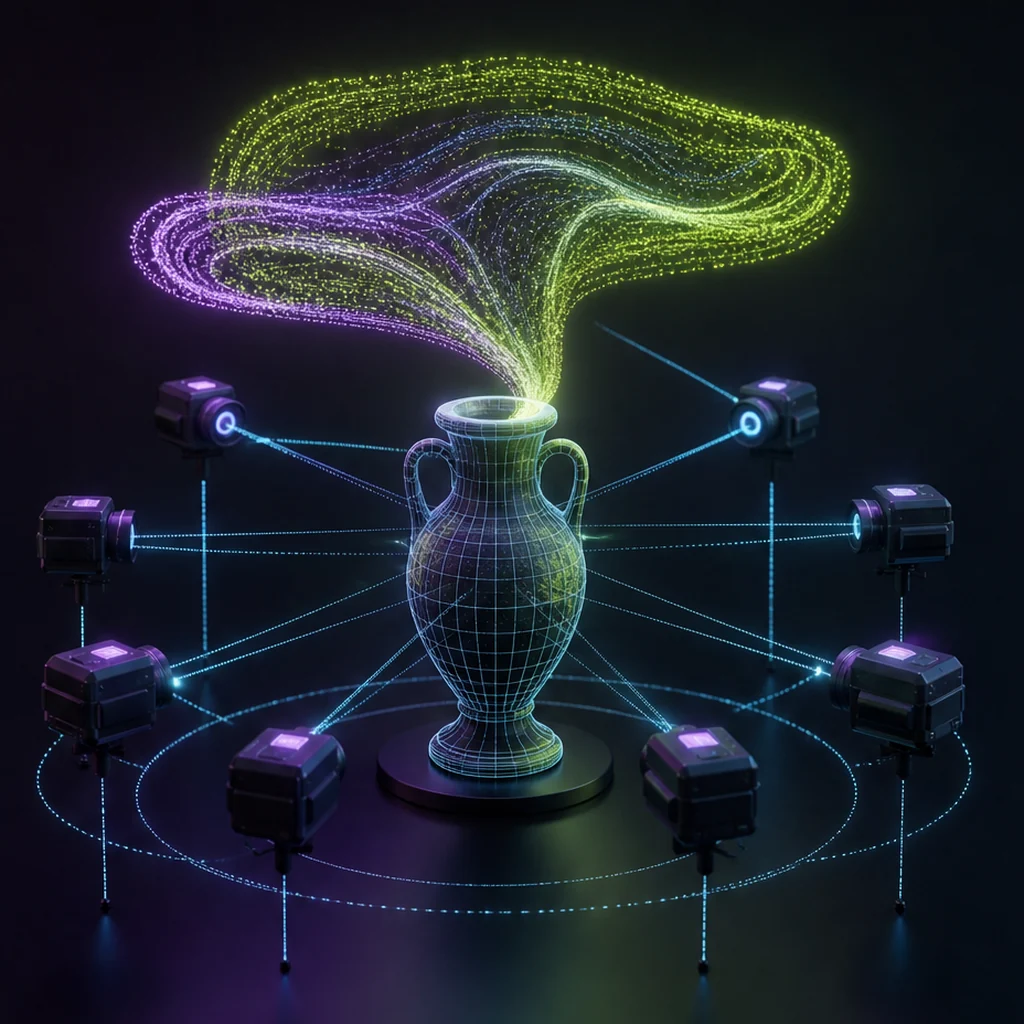
Coverage beats camera count alone
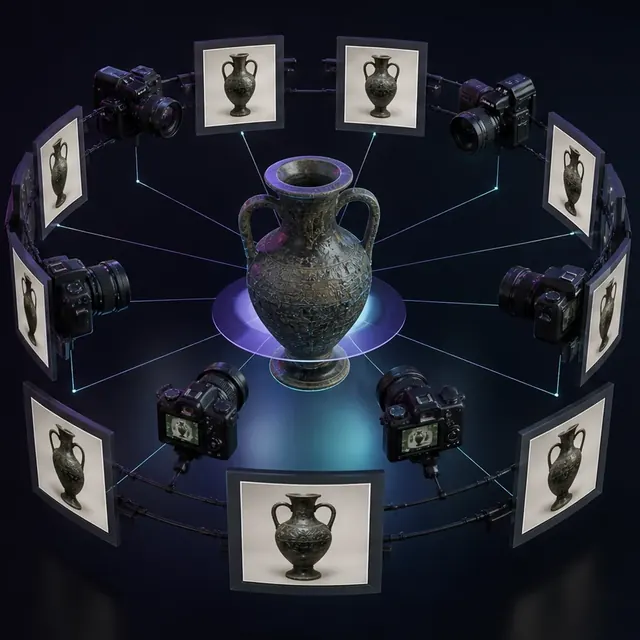
Useful multi-view capture surrounds the object with overlapping, sharp views at several elevations. A hundred nearly identical angles add less information than a smaller set that covers the top, underside and concavities. Lock exposure and focus when possible, and avoid changing the object between frames.
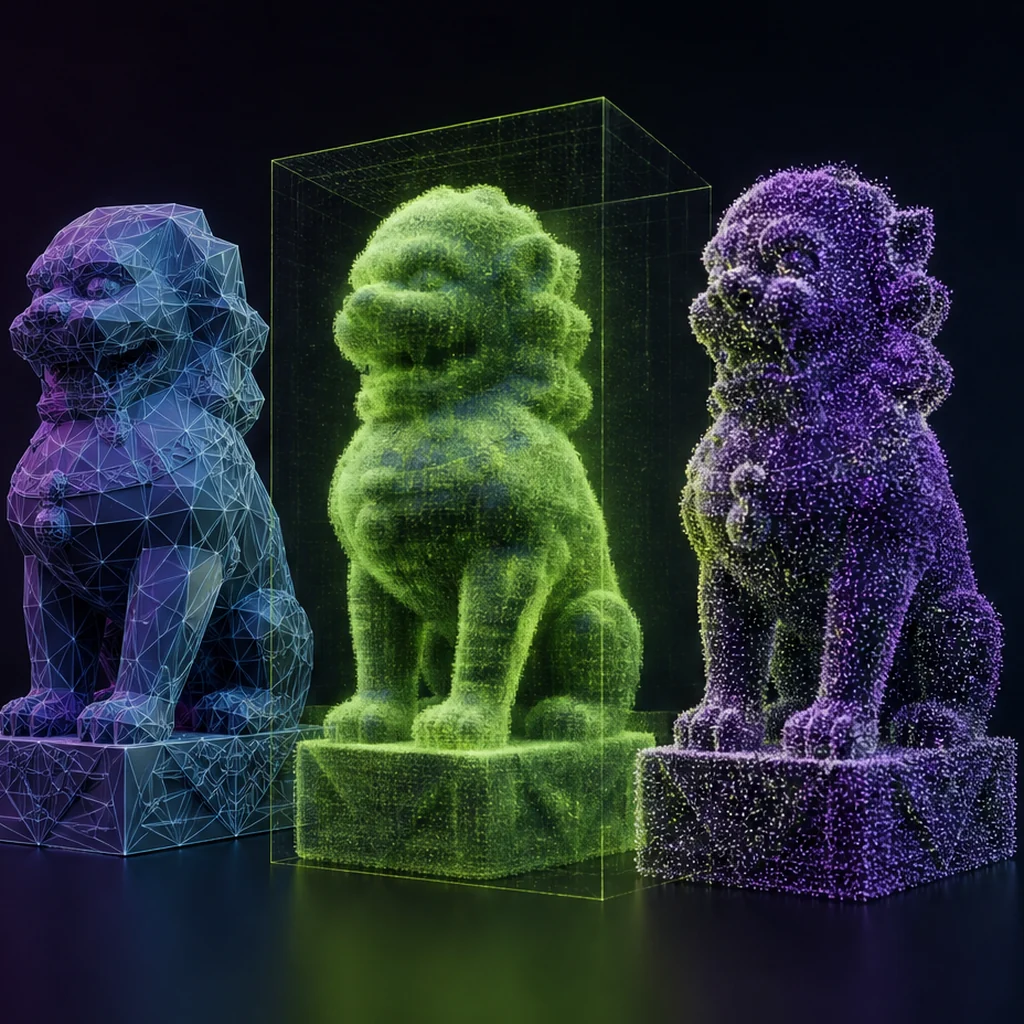
The exported result still needs a representation decision; compare NeRFs, Gaussian splats and meshes, before planning conversion and runtime use.
Materials can mislead geometry
Glossy, transparent and textureless surfaces are difficult because appearance changes with viewpoint or offers few stable correspondences. Diffuse temporary surface treatment may help controlled capture, but should only be used when safe for the object. Always retain the original photographs and note capture conditions.
Judge neutral renders and engine imports
Compare silhouettes against held-out views that were not used as the primary reference. Inspect hidden surfaces, thin parts and scale. Then test the exported model with neutral materials and lights. A photoreal baked texture can conceal distorted geometry until the asset is relit or animated.
Input preparation happens before reconstruction: isolate the subject with a background remover, and keep the untouched original beside the cleaned copy so the evidence stays auditable.
Choose reconstruction or generation by the evidence available
If a real object exists and accurate identity matters, controlled multi-view capture gives the pipeline evidence to test. If only one concept image exists, the unseen geometry remains a generated proposal.
Use capture for an existing subject
Record overlapping views around the object when the result must match a real surface or scene.
Use generation for open design
Treat one-image output as a fast interpretation when several hidden shapes could satisfy the same picture.
Keep comparison views out
Hold back a few photographs and compare them with the result so the input is not also the only test.
Audit an image-to-3D capture set
Photograph a household object in two sets: one sparse orbit at eye level and one controlled set with high, low and back views. Keep a few angles out of both inputs. Compare each reconstruction against those held-out photographs and inspect geometry with a plain gray material. Recording where each set fails makes the value of coverage - And the cost of hidden-surface inference - Immediately visible.
Single-image versus multi-view reconstruction
Fast, strongly prior-driven
More geometric evidence
Gloss, glass, thin parts and occlusion
Image-to-3D validation checklist
- Capture sharp overlapping views around the full object.
- Include scale reference and several elevations.
- Avoid reflections, transparency and moving shadows.
- Compare against held-out photographs.
- Inspect geometry without the baked texture.
Questions about image-to-3D reconstruction
How many images are enough?
There is no universal number; coverage, sharpness, material and geometry matter more than count alone.
Can one concept image define exact geometry?
No. Treat unseen surfaces as generated proposals that require art direction and review.
When is multi-view capture worth the extra work?
Use multiple controlled views when object identity, hidden surfaces or measured geometry matter. A single image is better suited to fast concept volume where plausible unseen detail is acceptable.
Apply this 3d ai foundations guidance
Before running a reconstruction, check whether the source set covers the object: Use the image-to-3D capture-readiness tool. After export, remove the material and inspect the surface with: Check reconstructed mesh topology. The two checks expose different failures that a polished reference-view render can hide.
Primary sources & technical references
- NeRF project page and paperOpen source ↗
- INRIA 3D Gaussian Splatting researchOpen source ↗
- Blender ManualOpen source ↗