Name the spatial output
Confirm whether the system returns a mesh, point cloud, neural field, Gaussian splats, materials or a scene graph. Similar renders can hide very different production constraints.
Learn how generative 3D models are trained, evaluated and prompted, and how meshes, NeRFs, splats and reconstruction methods differ for games.
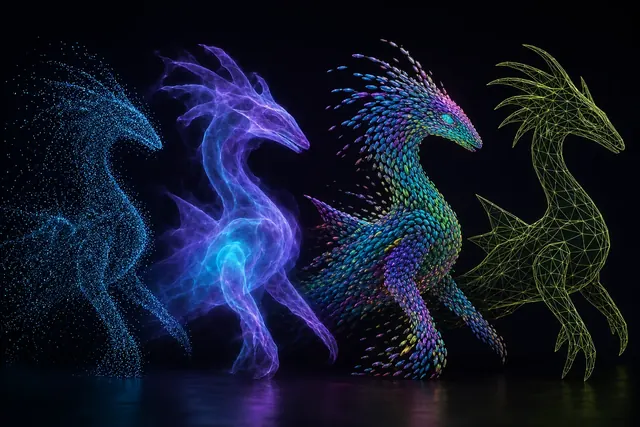
Generative 3D is not one technique. A system may optimize a neural field from text, predict a point cloud, reconstruct a scene from photographs, or emit an explicit mesh. Those outputs behave differently once lighting, collision, animation and frame budgets enter the picture.
This hub starts with representation and evidence. It explains what a demo establishes, what a benchmark omits, and which questions decide whether an output is useful inside a real-time game rather than merely impressive in a turntable render.
Begin with What is generative 3D? A production-first definition, then continue through How generative 3D models are trained and evaluated when the production question reaches the other end of this hub.
Start with what the game must do with the result. The required interaction determines which representation and conversion costs are acceptable.
Confirm whether the system returns a mesh, point cloud, neural field, Gaussian splats, materials or a scene graph. Similar renders can hide very different production constraints.
Record collision, deformation, relighting, destruction, navigation, streaming and editing requirements before comparing visual quality.
Export the result, reopen it outside the vendor viewer and measure conversion, cleanup, memory and runtime behavior on the target platform.
These four guides cover separate decisions within 3d ai foundations. Read the guide that matches the deliverable or production risk you need to resolve.

A field guide to models that synthesize shapes, scenes and spatial representations - And the work required before game use.

From language conditioning and image priors to explicit meshes, this guide explains the major text-to-3D routes without demo-page shorthand.
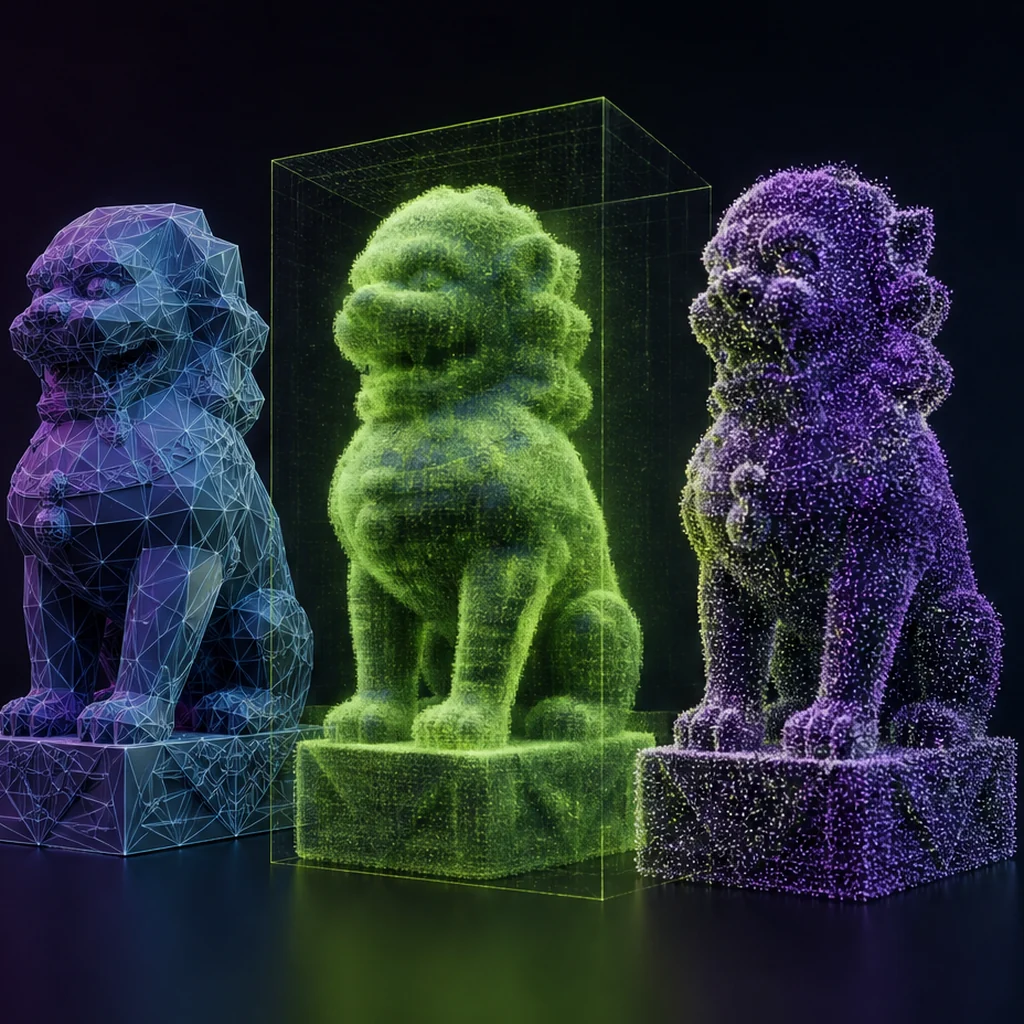
Choose a spatial representation by editability, runtime and gameplay needs - Not by screenshot quality.
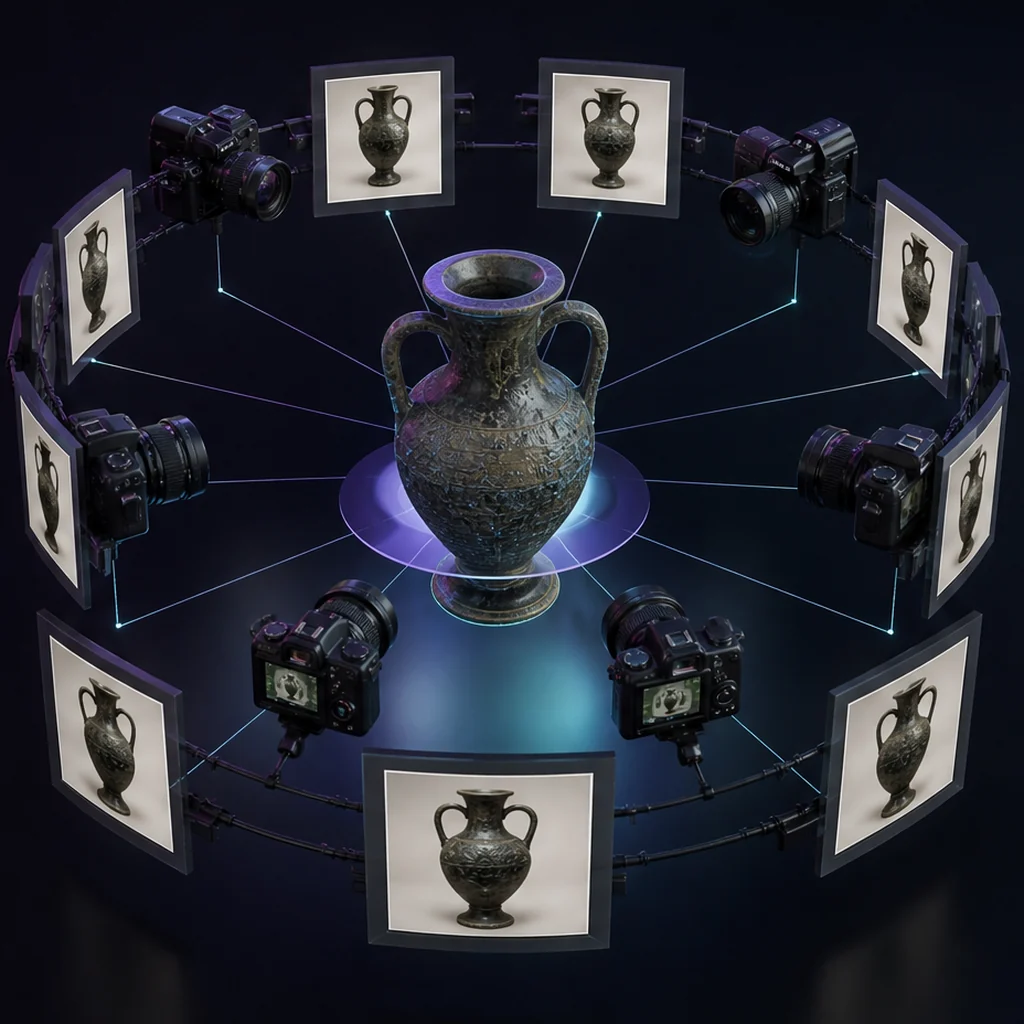
A practical explanation of single-image and multi-view reconstruction, with capture advice and honest limits.

Connect 3D training data, representations and evaluation metrics to the production behavior creators actually receive.
Choose only after naming the delivered representation, the evidence behind it, the interactions it must support and any conversion the pipeline will require.
A family of methods that turns a natural-language description into a 3D representation, often by combining language-image priors with 3D optimization or a directly trained 3D generator.
Usually not by itself. It is a view-synthesis representation; collision, animation, editing and conventional rendering commonly require conversion or a specialized runtime.
Topology controls deformation, shading, UV layout, collision authoring and the amount of cleanup required before an asset can ship.