Write the contract
Define traversal, pacing, state, lore, safety and performance constraints before asking a model for candidates.
Use AI for terrain, levels, NPCs, mechanics and narrative while keeping traversal, rules, safety, validation and playtesting under human control.
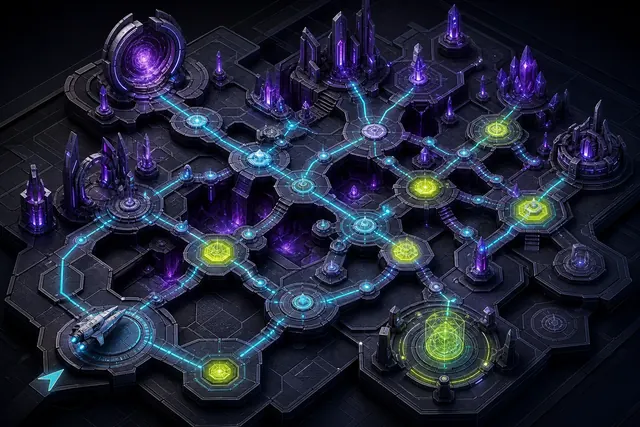
World generation is a constraint problem disguised as a creativity problem. A level must satisfy traversal, pacing, readability, performance, encounter logic and narrative function at the same time. A plausible image of a level proves almost none of those things.
This hub treats models as proposal systems inside a measured design loop. The useful output is not endless novelty; it is a candidate that can be tested, explained, revised and reproduced under a known seed and rule set.
Begin with An AI-assisted level design workflow that preserves intent, then continue through Automated playtesting for generated game levels when the production question reaches the other end of this hub.
Layouts, mechanics and dialogue become useful when their constraints can be inspected and their behavior can be tested repeatedly.
Define traversal, pacing, state, lore, safety and performance constraints before asking a model for candidates.
Reject disconnected spaces, impossible states, broken dependencies and prohibited narrative behavior before visual polish hides the problem.
Store seeds and versions, measure player behavior and failure cases, then revise the rules or authored boundaries rather than selecting by novelty.
These four guides cover separate decisions within worlds & systems. Read the guide that matches the deliverable or production risk you need to resolve.
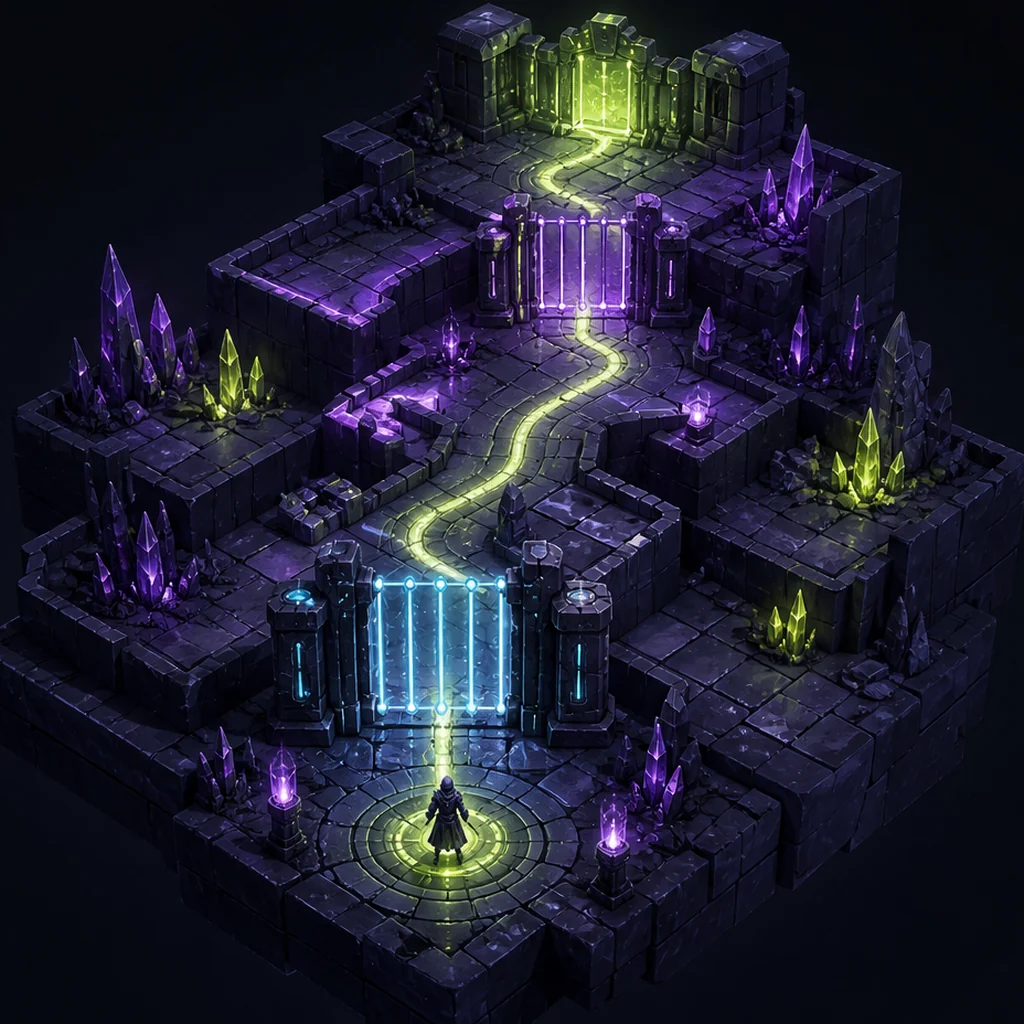
Use models for candidate generation inside a constraint, validation and playtest loop.

Rules, learned distributions and the hybrid systems that make world generation controllable.

Turn mechanic proposals into state, rules, edge cases, prototypes and measurable playtests.
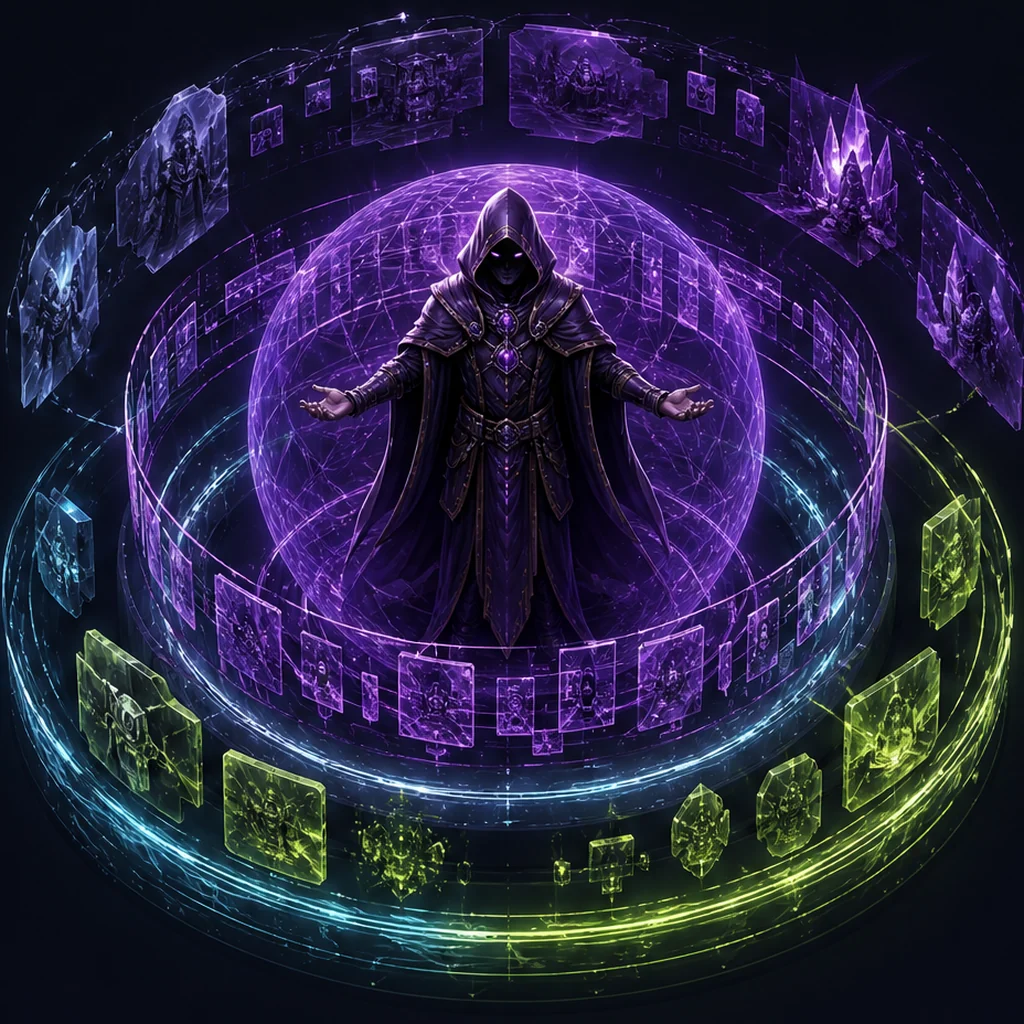
Design bounded character, quest and dialogue systems with memory, safety, lore and failure states.
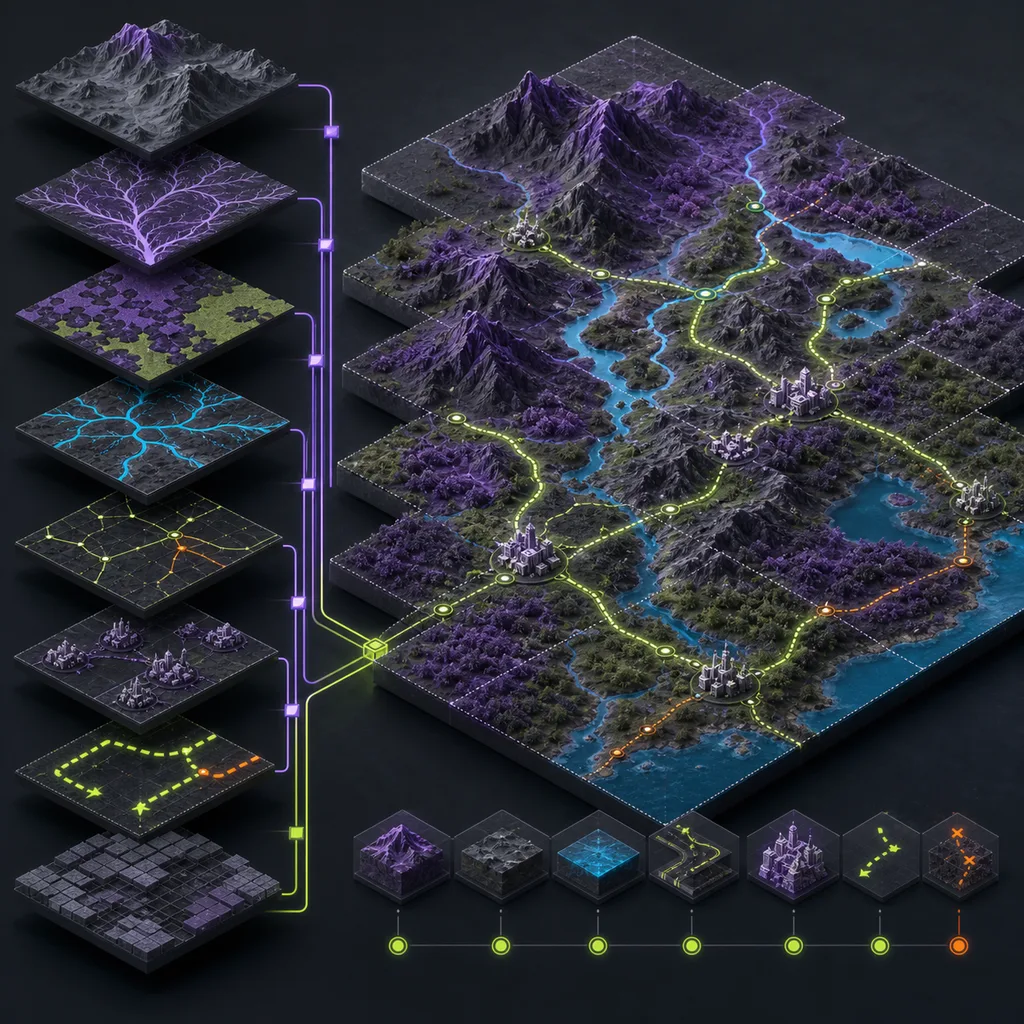
Combine learned terrain proposals with deterministic hydrology, biome, road, navigation and streaming rules that keep worlds playable.
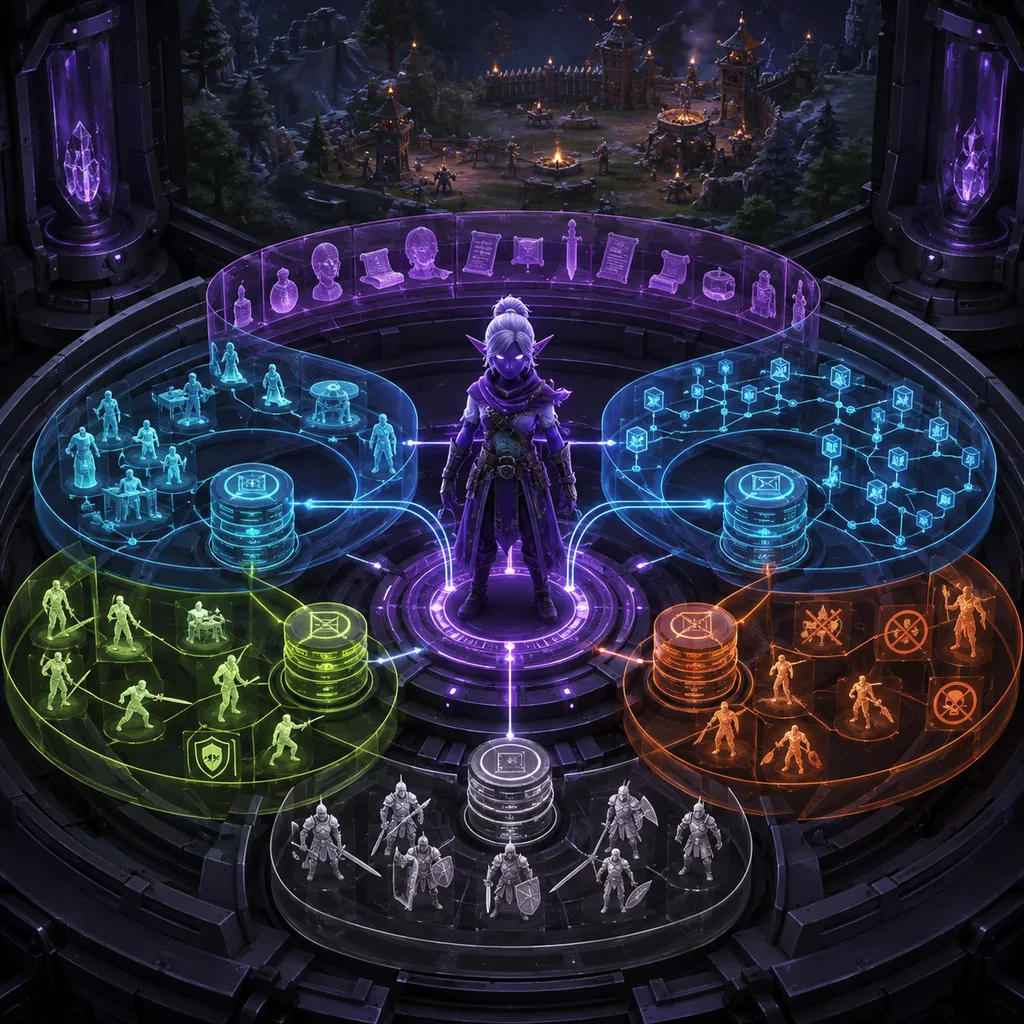
Design bounded game characters that turn generated language into permitted actions without surrendering canon, state or player safety.
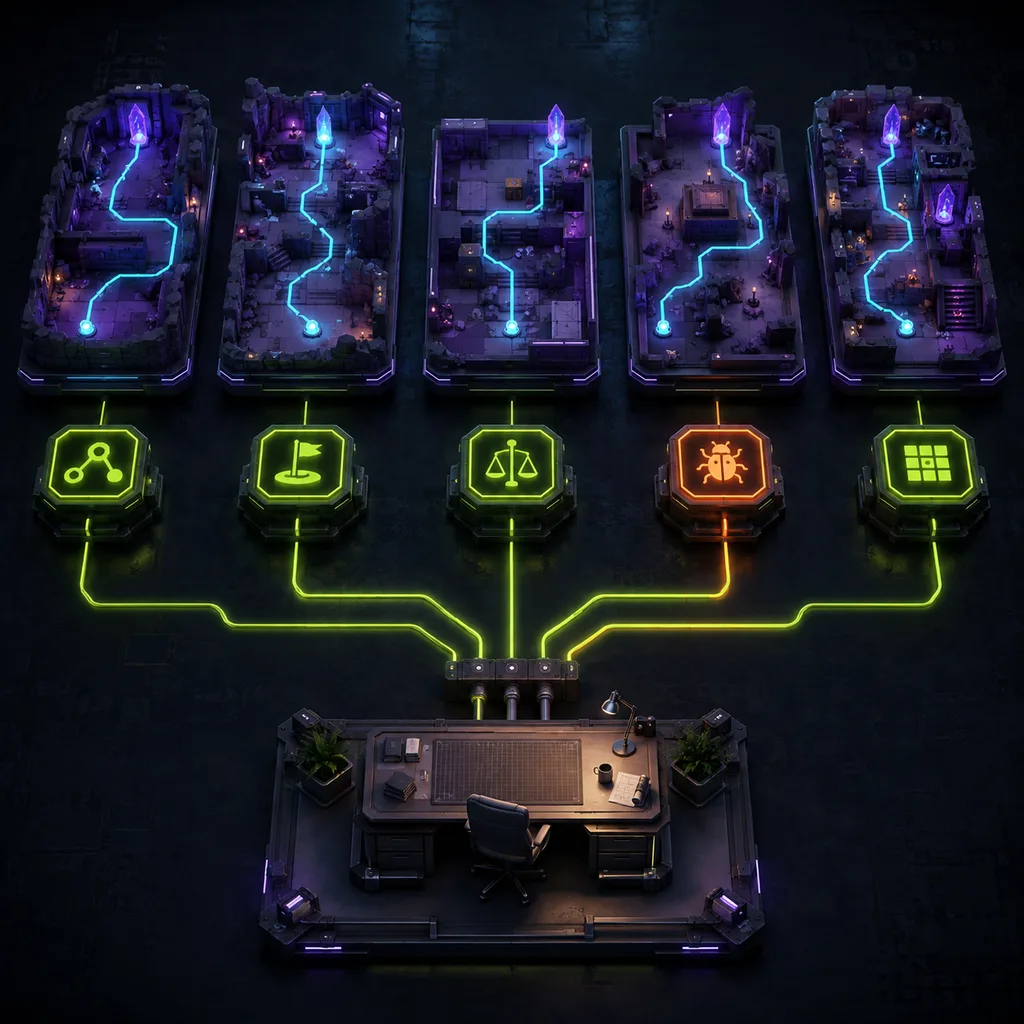
Use validators and diverse agents to find reachability, difficulty and exploit failures while preserving human evidence about fun and readability.
Keep goals, hard constraints, state rules, canon and acceptance tests explicit. Generation can propose candidates; play evidence decides what advances.
It can propose layouts, but balance is an observed property established through simulation, telemetry and human playtesting.
Explicit constraints, deterministic seeds, validators, editable intermediate representations and an approval loop.
It can expand and formalize ideas, but mechanics need executable specifications, edge-case analysis and play evidence.