How an AI-assisted 3D asset history stays reproducible
- Version control
- Git LFS
- Helix Core
- Binary file locking
- 3D source asset
- File hash
- Reproducible pipeline
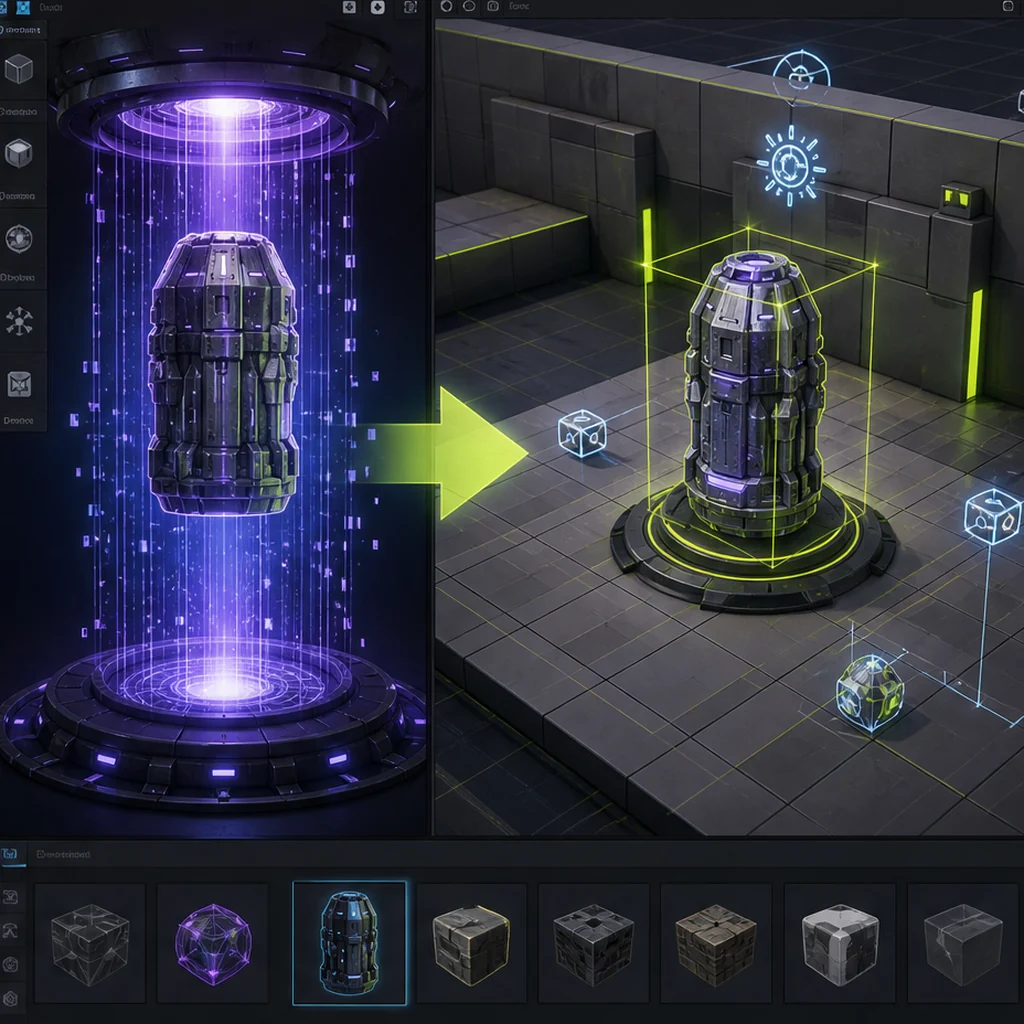
Raw inputs and generation output
preserve the original model interaction and result.
An authoritative editable source
records human changes and production ownership.
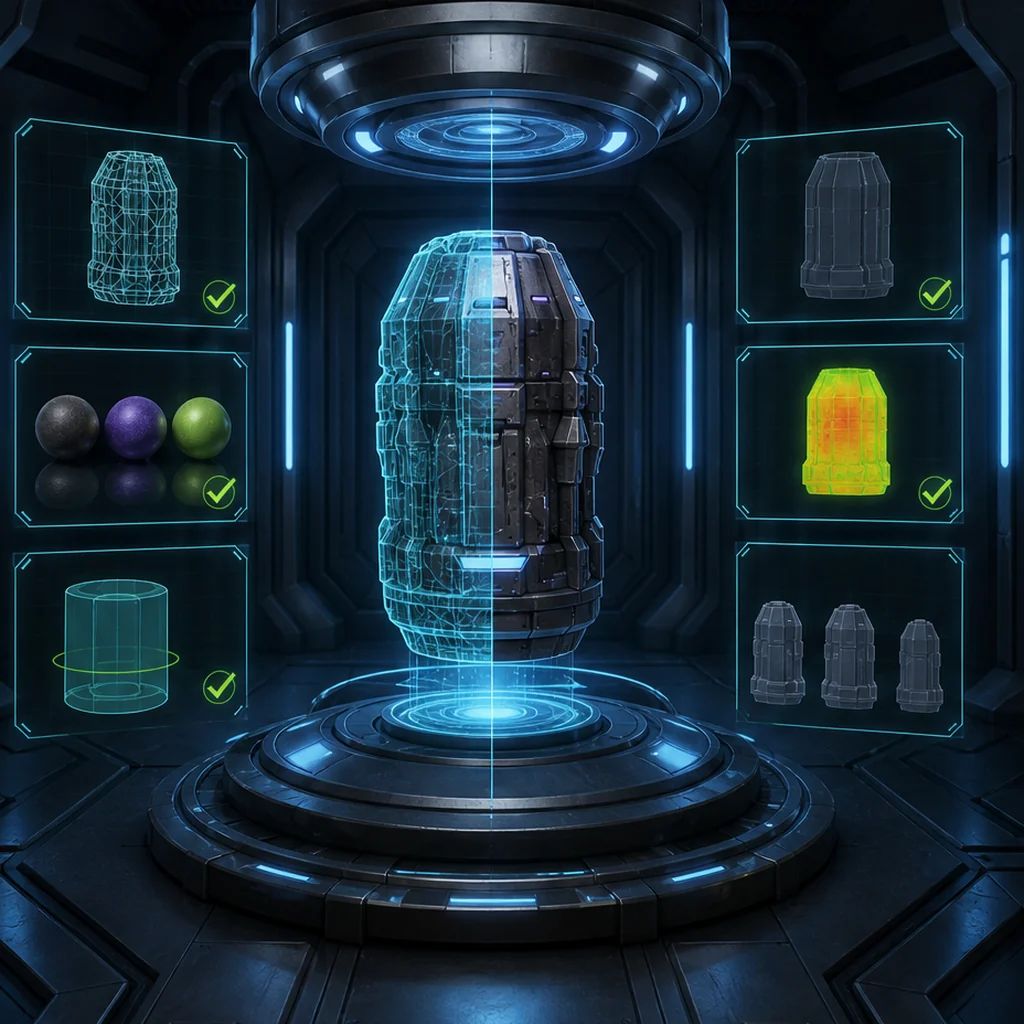
Revision-linked validation
identifies the exact interchange and engine result that was approved.
Give every file a declared role
A generator preview, raw mesh, Blender source, texture source, GLB or FBX handoff and engine import are not interchangeable backups. Mark which source is authoritative and which artifacts can be rebuilt. Keep the raw export immutable so the team can measure edits and revisit a decision after a model change. Generated caches belong outside manual review when the engine can recreate them; irreplaceable inputs, settings and approvals belong in protected history.
Choose storage and locking for binary reality
Git LFS stores large content outside ordinary Git objects while keeping pointer files in the repository. Centralized systems such as Helix Core support workflows where binary files can be locked because they cannot merge like source code. The correct choice depends on repository size, team access, hosting and engine integration. Test clone or sync time, partial workspaces, lock recovery and disaster restoration with actual assets before committing the studio.
Define authoritative and delivery files with the 3D format comparison, before deciding what is source, generated or safe to rebuild.
Version the recipe beside the output
Record provider, product, model or feature version, prompts or authorized inputs, seed when exposed, settings, export preset, DCC version, plugins and engine importer. Use stable asset identifiers instead of filenames alone. Store a machine-readable manifest beside the editable source and update it when a material, rig or collision stage changes. If an external service cannot reproduce an old model, the retained raw output and complete edit history become more important.
Make reviews point to immutable revisions
A screenshot approval can drift away from the file that was inspected. Link the review to a commit or changelist, final hash, validation report and target build. When branches merge, rerun import and performance checks on the resulting asset rather than assuming binary conflict resolution preserved behavior. Test restoration by rebuilding one asset from a clean workspace. A reproducible pipeline proves that the accepted deliverable can be found, understood and rebuilt - Not that the generator itself is deterministic.
Rebuild one approved asset from a clean workspace
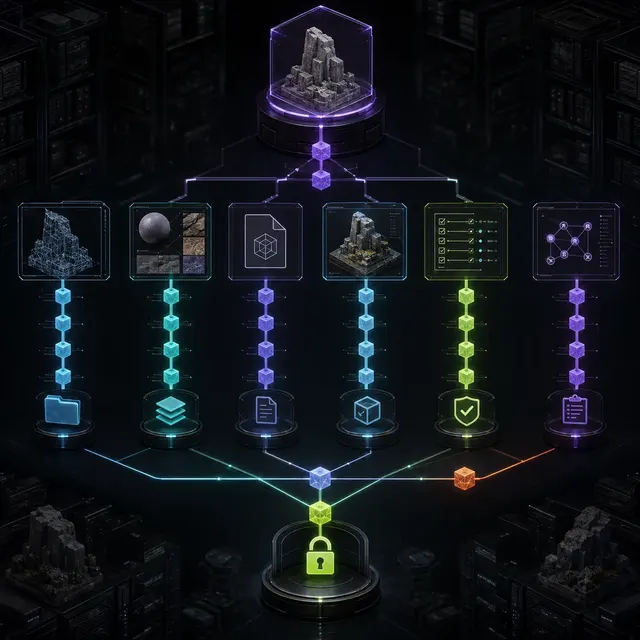
Choose one accepted asset and diagram every file from input through engine import. Mark each as immutable raw evidence, authoritative editable source, generated interchange or rebuildable engine data. Move a copy into a clean workspace at the approved revision and rebuild it using only the recorded versions and presets. Document missing dependencies, ambiguous ownership and any step that depends on an unrecorded local setting.
3D asset source and storage decisions
Preserves what the generator delivered
Contains the approved editable production work
Connects export, validation and review to an exact file
AI-assisted 3D version-control checklist
- Declare raw, source, interchange and derived file roles.
- Use large-file storage and locks where binaries cannot merge.
- Version prompts, models, presets and tool versions.
- Attach validation and approval to a revision and hash.
- Restore and rebuild one asset from a clean workspace.
Questions about versioning AI-assisted 3D assets
Should engine-generated caches be committed?
Follow the engine's documented workflow; usually rebuildable caches are excluded while source assets and required metadata are versioned.
Can Git merge a Blender or FBX file safely?
These are binary formats in normal workflows, so parallel edits usually need locking, ownership or deliberate manual resolution.
Does a seed guarantee reproducibility?
No. Model versions, nondeterministic compute, provider changes and preprocessing can still change the output.
Apply this production & trust guidance
Choose what each handoff must preserve with: Define the source and interchange roles. Bind technical checks to each revision through: Rerun validation for every reviewed revision. The history is complete when a clean workspace can identify and rebuild the accepted deliverable.
Primary sources & technical references
- Git Large File Storage official documentationOpen source ↗
- Perforce: version control workflow for binary filesOpen source ↗
- C2PA technical specificationOpen source ↗
- OpenUSD documentation and specificationsOpen source ↗
- Khronos glTF specification and resourcesOpen source ↗